Have you ever spent an entire night cramming for a test, felt confident the next morning, but found yourself unable to recall a single detail a week later?
You aren’t alone, and you aren't "bad at memory." You are simply fighting against the natural way the human brain is wired. The brain is designed to discard information it deems unnecessary to keep us from being overwhelmed.
To hack this process and move information from your short-term memory into your long-term storage, you need a technique called Spaced Repetition.
The problem: the Forgetting Curve
To understand the solution, we first have to understand the problem. In the late 19th century, a German psychologist named Hermann Ebbinghaus discovered something discouraging: The Forgetting Curve.
His experiments showed that recall can decline over time. The rate varies with the material, the learner, and how it was learned; there is no single forgetting percentage that describes everyone.
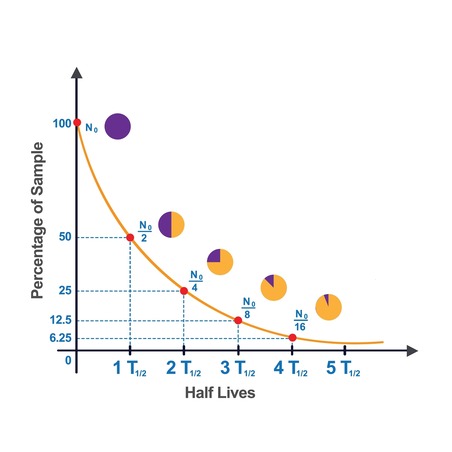
However, Ebbinghaus also discovered a loophole. If you interrupt the forgetting process by reviewing the material at specific times, you reset the curve. Each time you review, the curve flattens, meaning you forget slower and slower.
What is spaced repetition?
Spaced Repetition (SRS) is a learning technique where you review at increasing intervals instead of cramming in a single session. A simple starter cadence looks like this:
- Once today (right after you learn it)
- Once tomorrow
- Once in three days
- Once in a week
- Once in a month
This is an example practice schedule, not the app’s built-in sequence. There is no single ideal interval for every learner or text.
Why it works
It relies on a psychological phenomenon called the Spacing Effect. The brain builds stronger neural connections when it struggles slightly to retrieve information. By waiting until the moment you are just about to forget something before reviewing it, you force your brain to work harder, which drastically strengthens the memory.
The 3 golden rules for success
- Combine with active recall. Don’t reread—test yourself. Hide the answer, speak or type what you think it is, then check. That short stretch cements the memory.
- Chunk before you review. Break long passages into 1–3 sentence pieces so you can master and link them. Rebuild the whole once each chunk is solid.
- Consistency is king. Spaced repetition is a marathon. Daily micro-sessions beat a weekly cram, and skipping reviews creates a backlog that feels impossible to clear. Even 10 minutes keeps the queue light.
Run it inside Memorize By Heart
- Add your text. For long passages, blank lines create clear chunk boundaries. Premium lets you select a subset of chunks to practice.
- Start with Tap to Reveal, Slider, or Listen to get familiar with the text. These Familiarize games do not advance the review schedule.
- Return when a review is due. New texts start with a review about one day later. The default intervals are 1, 3, 7, 18, and 45 days, followed by 120-day maintenance reviews.
- On a due review day, the first scored Solidify or Evaluate game sets the review outcome. A score of at least 75% in Solidify or 50% in Evaluate can advance you; very low scores can move you back.
- Premium users can set a target due date, which changes the earlier intervals to fit that goal. You can still practice between scheduled reviews.
The app uses a review schedule and your results. It does not measure the exact moment you will forget. Read the current spaced repetition rules for more detail.
Quick summary
Spaced repetition is the antidote to the Forgetting Curve. By swapping marathon cram sessions for short, spaced reviews paired with active recall, you learn more in less time and remember it for years. Whether you’re using a shoebox Leitner system or Memorize By Heart’s games, trust the intervals and keep showing up—the curve will flatten, and your memory will catch up.